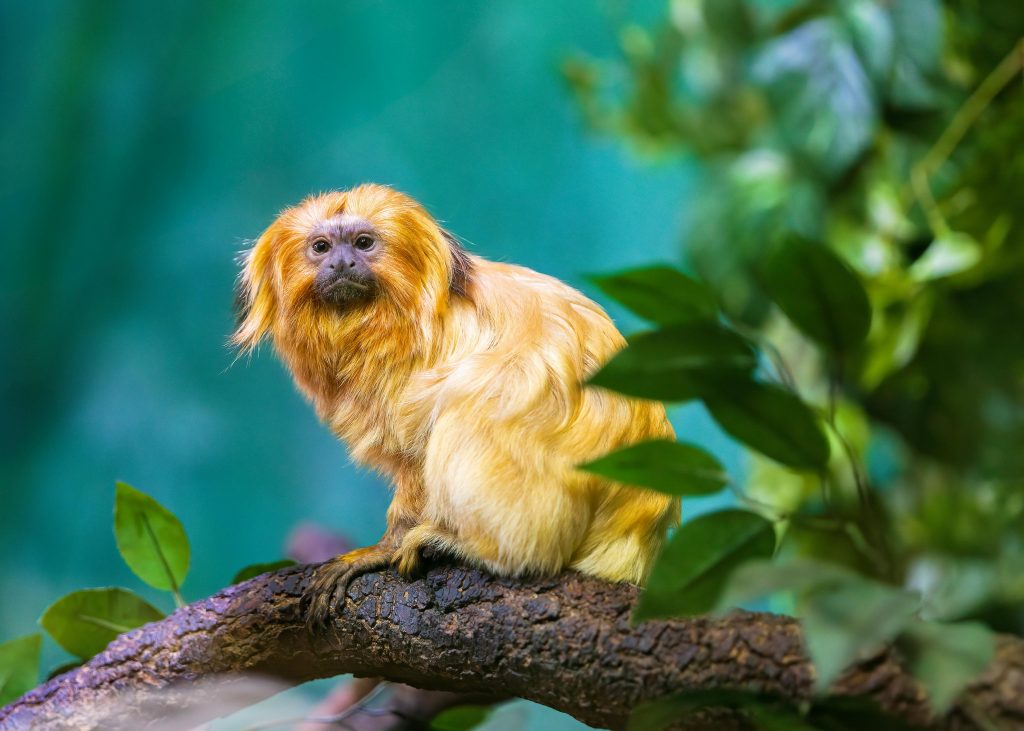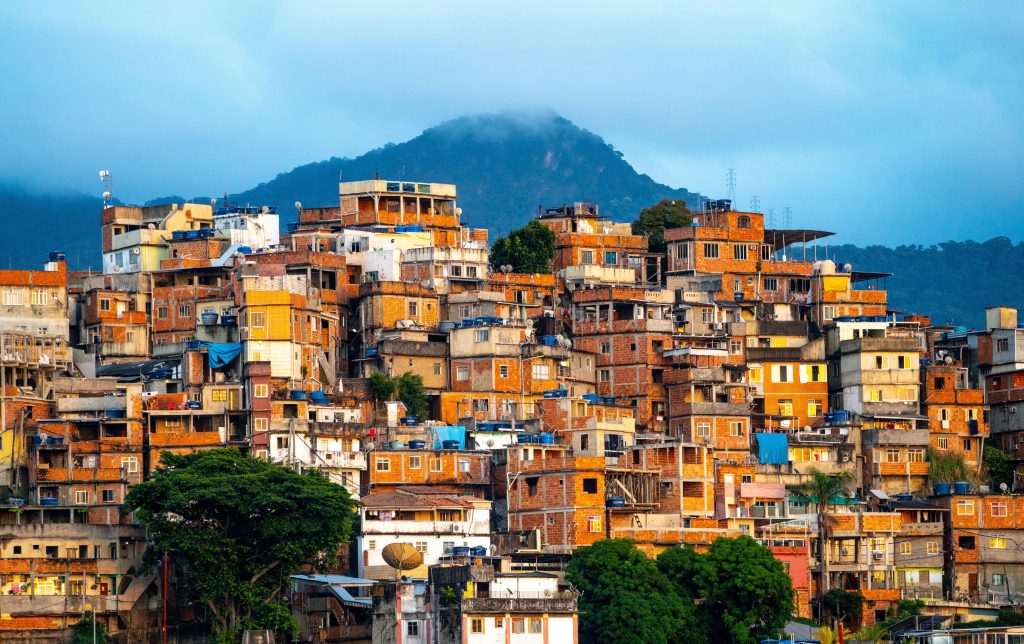
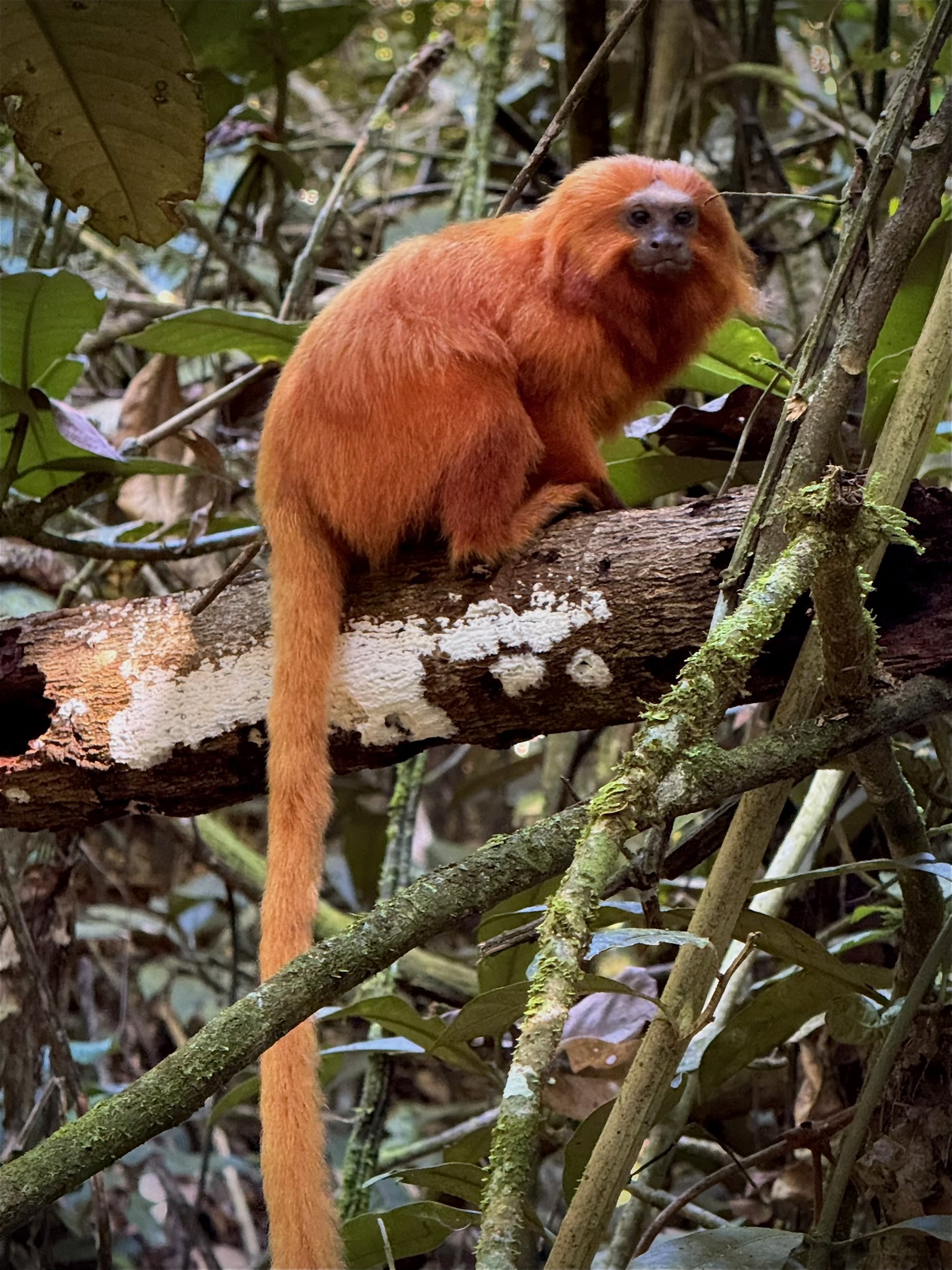
Small enough to hold in two hands, with a flame-coloured coat and a flowing mane that glows in the dappled forest light. The golden lion tamarin is one of those rare creatures that seems too vivid to be real. By the 1970s, fewer than 200 remained in the wild – and the world came close to losing them forever.
What happened next is one of conservation’s great stories: of scientists, zoos, landowners and local communities refusing to let them disappear. Today, almost 5,000 golden lion tamarins roam the forests outside Rio de Janeiro – still vulnerable, still needing protection, but alive and growing.
Journey Brazil’s Managing Director, Mikael Castro, sat down with Luis Paulo Ferraz – Executive Director of the Associação Mico-Leão-Dourado (AMLD), the organization at the heart of this effort for over three decades – to talk about one of the natural world’s most captivating creatures, how it almost disappeared, and the decades of work that have brought it back. Luis Paulo has been connected to this work since 1999, when he first visited the project as a WWF coordinator and walked into the Atlantic Forest to find himself surrounded by a family of golden lion tamarins. He never quite left. Today, he has spent decades fighting for this forest and the animals that depend on it – and he speaks about both with the quiet conviction of someone who has given his life to them.
It Begins with the Forest
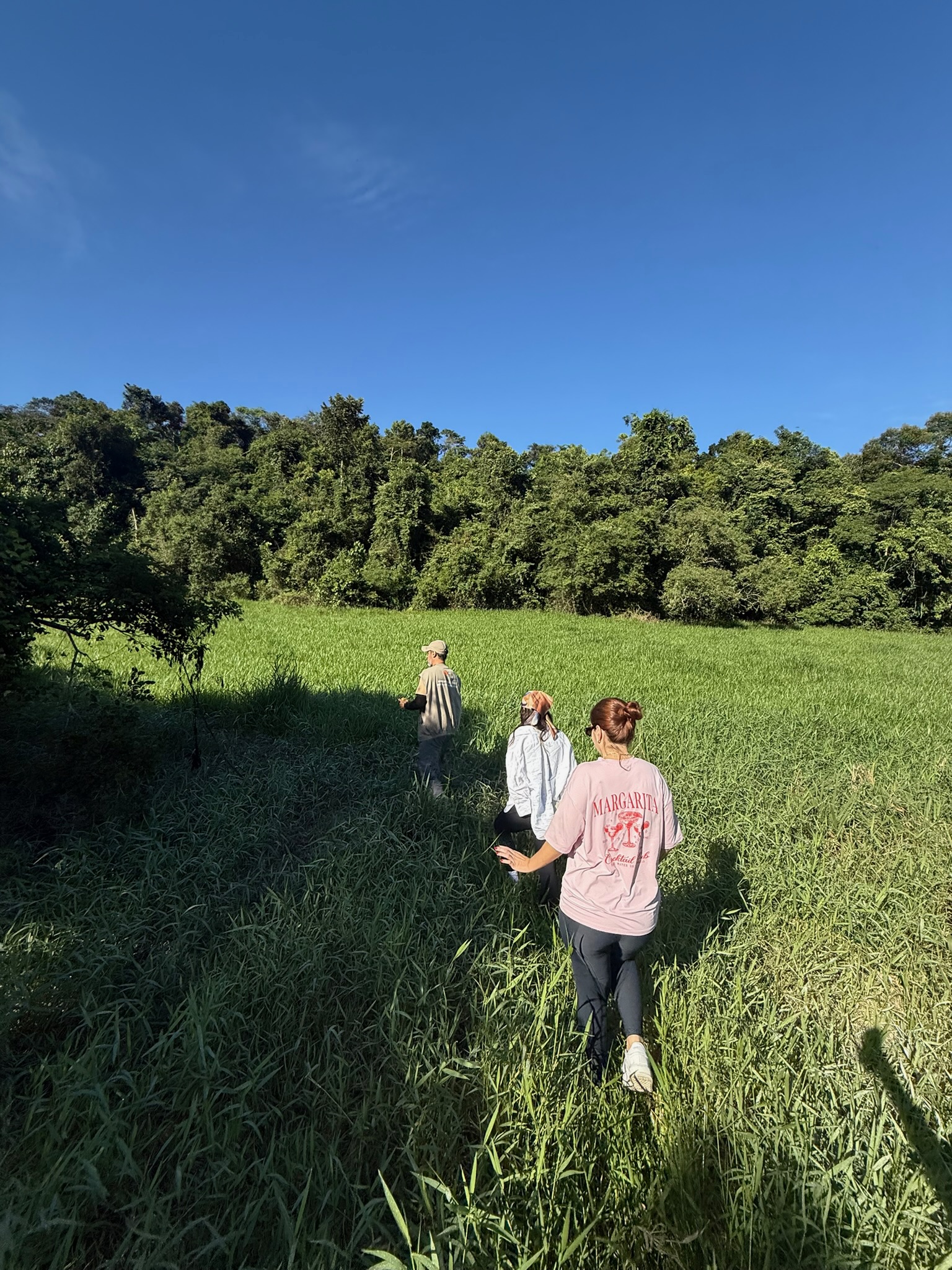
To understand the golden lion tamarin, you first have to understand the Atlantic Forest. Stretching along Brazil’s vast coastline, this biome is one of the most biodiverse on the planet – and one of the most destroyed. It is home to 70% of Brazil’s population, and centuries of clearing land for cities, farms and roads have taken an enormous toll.
“My work has always been about the Atlantic Forest,” Luis says. “The golden lion tamarin brought me deeper into it.”
The scale of that damage is felt deeply in the lowland forests surrounding Rio de Janeiro – the only place on Earth where golden lion tamarins exist naturally. “We have only 2% of the forest left,” Luis says. “That means most of the forest has already gone and the challenge to restore it is big because we have a lot of people living here as well.” The stakes reach far beyond the monkeys themselves. “All those people living here depend on forests for environmental services – providing water for the people, and the balance of the climate. Especially water – the forest produces water in all these urbanized areas.”
The tamarins, in this sense, are a marker of the forest’s health: where they thrive, the forest is being saved. And where the forest is saved, communities benefit too.
A Success Story with an Ongoing Mission
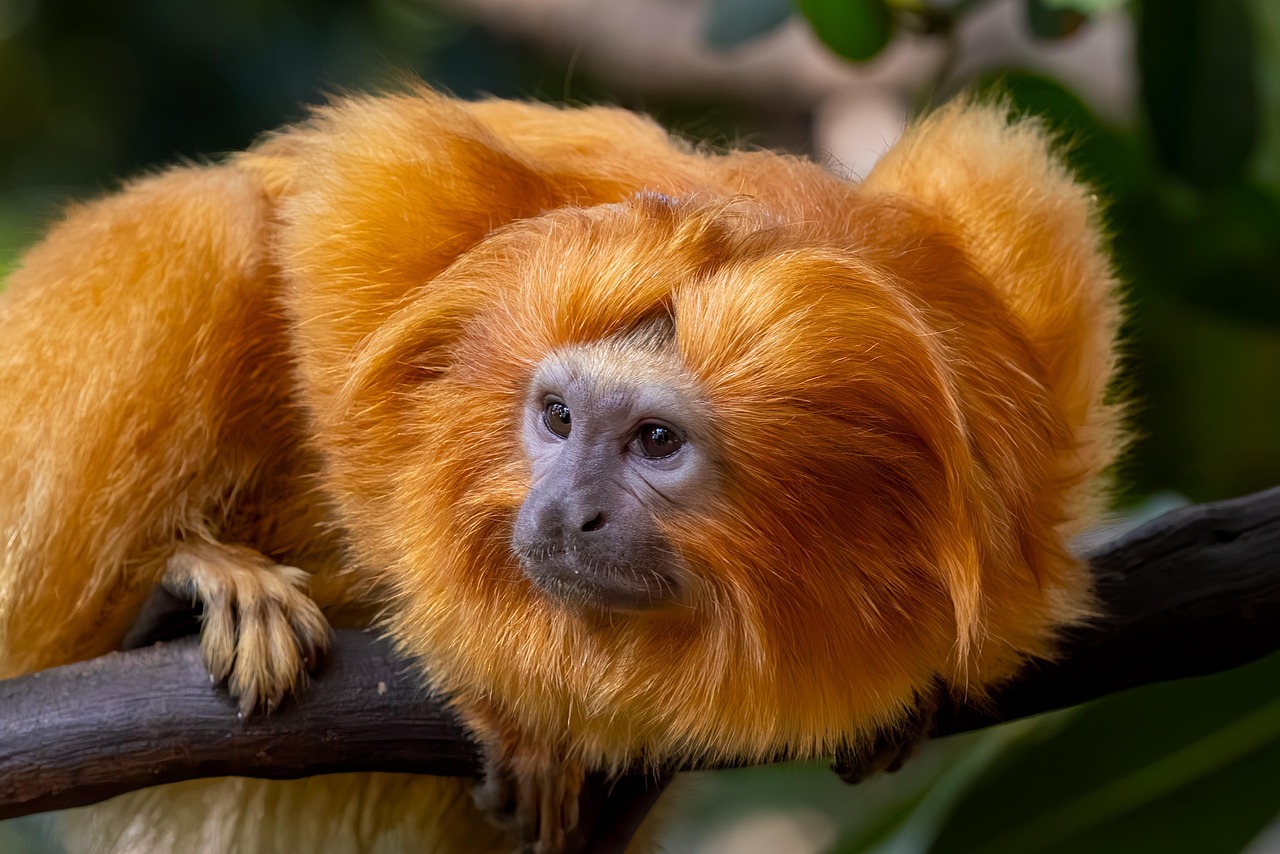
“In the 70s and early 80s, the estimate of this population in the wild was only 200 animals,” Luis says. “It was really, really dramatic and very close to the risk of extinction. And all this work involved so many different people, different institutions that started to get involved in Brazil and outside of Brazil.”
Habitat loss had stripped away their forest home. International wildlife trafficking had removed animals for decades. What followed was an extraordinary mobilization. In 1986, an international conservation effort led by the Smithsonian Institution brought together researchers, governments, NGOs and local communities. The Poço das Antas Biological Reserve, the first federal reserve created specifically for an endangered species in Brazil, became the focal point for fieldwork. Environmental education programs engaged landowners and local residents, many of whom eventually set aside parts of their own properties as private forest reserves. The work of rebuilding both habitat and species began.
The result, measured across four decades, is remarkable: from that handful of survivors to nearly 5,000 today. In 2004, the species was downlisted from critically endangered to endangered – a meaningful shift, but not the end of the story.
“That shows how work on environmental issues takes time to get good results,” Luis reflects. “We are here trying to continue the work that started in the 80s.”
The challenges have evolved rather than disappeared. Wildlife trafficking remains an active threat, with AMLD working alongside federal police to address it. New invasive species create competition. Human populations continue to grow. And with only 2% of original habitat remaining, the pressure on what’s left is immense.
The Long Road Back to the Wild
By the early 1980s, the captive population in zoos worldwide had grown substantially, thanks to a coordinated international breeding program that had been underway since the early 1970s. The Smithsonian’s National Zoo was central to this effort, managing the global zoo population and pioneering the science of reintroduction. By 1984, over 40 zoos across North America and Europe were part of the program. A total of 146 captive-born tamarins would eventually be returned to Brazil over the following 16 years.
Releasing a zoo-born animal into the wild is not straightforward. Animals that have never encountered predators don’t know to fear them. They struggle to navigate real vegetation. They have to learn from scratch what it means to be wild.
The solution was gradual: tamarins at the National Zoo were moved from indoor enclosures to large outdoor “free-range” habitats with natural vegetation, where food was hidden rather than handed to them, forcing them to forage. Then came temporary enclosures set up within the Brazilian forest itself, followed finally by release – closely monitored, with supplemental food gradually reduced as the animals found their feet.
The tamarins, it turns out, are fast learners. They live in tight family groups, always a bonded pair with their offspring, and almost always born as twins. They are fiercely territorial, each family needing 40 to 50 hectares of forest to call their own. They communicate in complex calls, share food, and are, as Luis puts it, “always in a family – you don’t find them alone in the forest.”
“When you’re in the forest, sometimes with six of them surrounding you, it’s an experience you’ll remember for your entire life,” he says. “Especially after hearing about the story, that this animal almost disappeared from nature.”
The Work That Never Stops
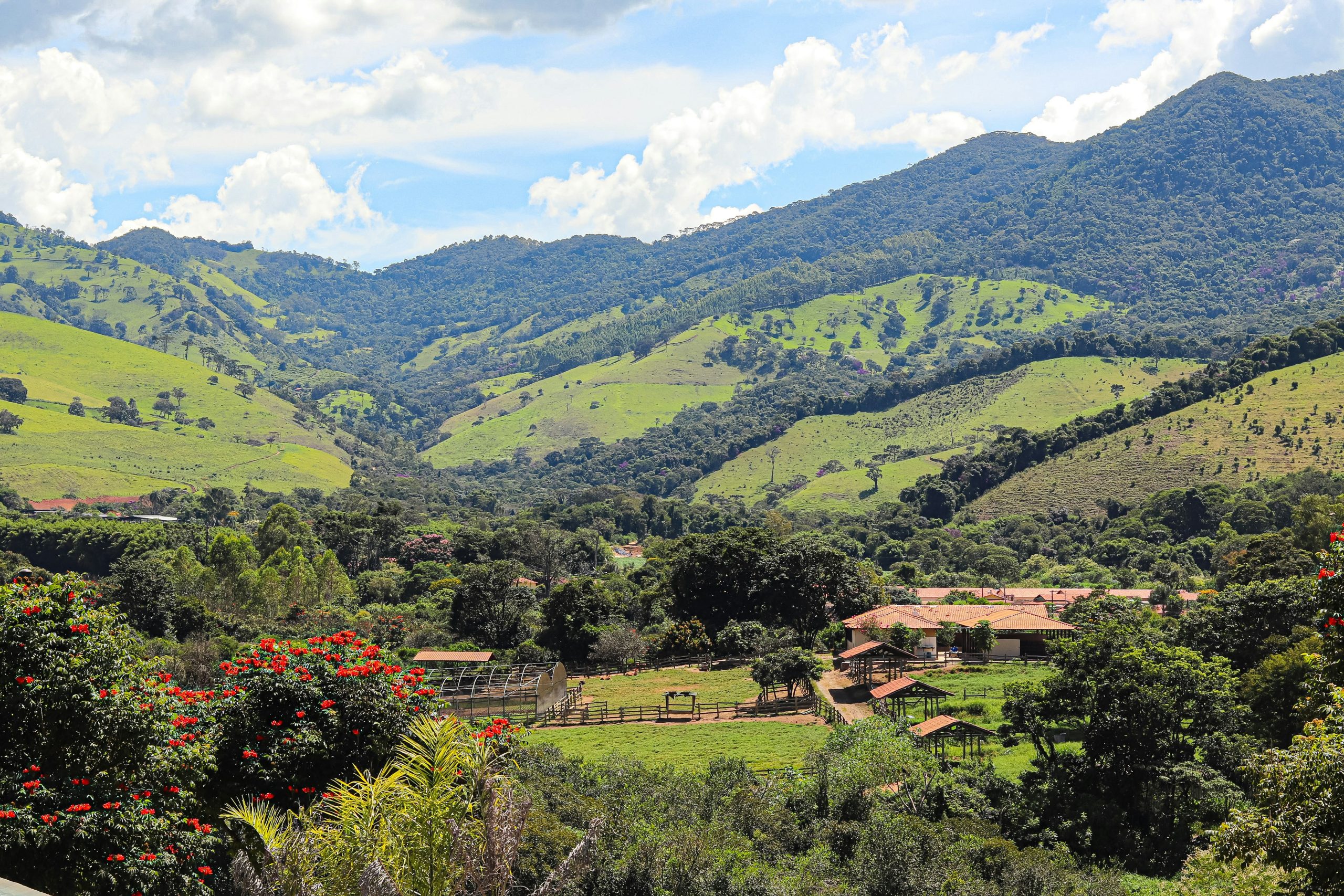
Today, reintroductions are no longer necessary. The wild population is growing on its own. What AMLD focuses on now is the work that underpins everything else: restoring and connecting the isolated patches of forest that remain.
“Most of the forest is fragmented into different islands,” Luis explains. “Those islands are not connected and the animals do not cross areas of pastures – they like to stay in the forest. So we are doing lots of restoration.”
A hard-won example of this work is the wildlife bridge, a canopy corridor crossing a major federal road that divides the tamarin’s territory. Getting it built took six years of negotiations, legal battles and relentless pressure on the road’s concessionaires. Mikael has stood on that bridge with Luis, understanding the full weight of what was achieved. It may look modest – a strip of canopy crossing a road – but for animals that will not leave the forest, it changes everything.
For the tamarins, the bridge has opened up territory that was completely inaccessible before. The cameras have since caught pumas and anteaters crossing too – a sign of what a connected forest makes possible.
The Golden Lion Tamarin Ecological Park
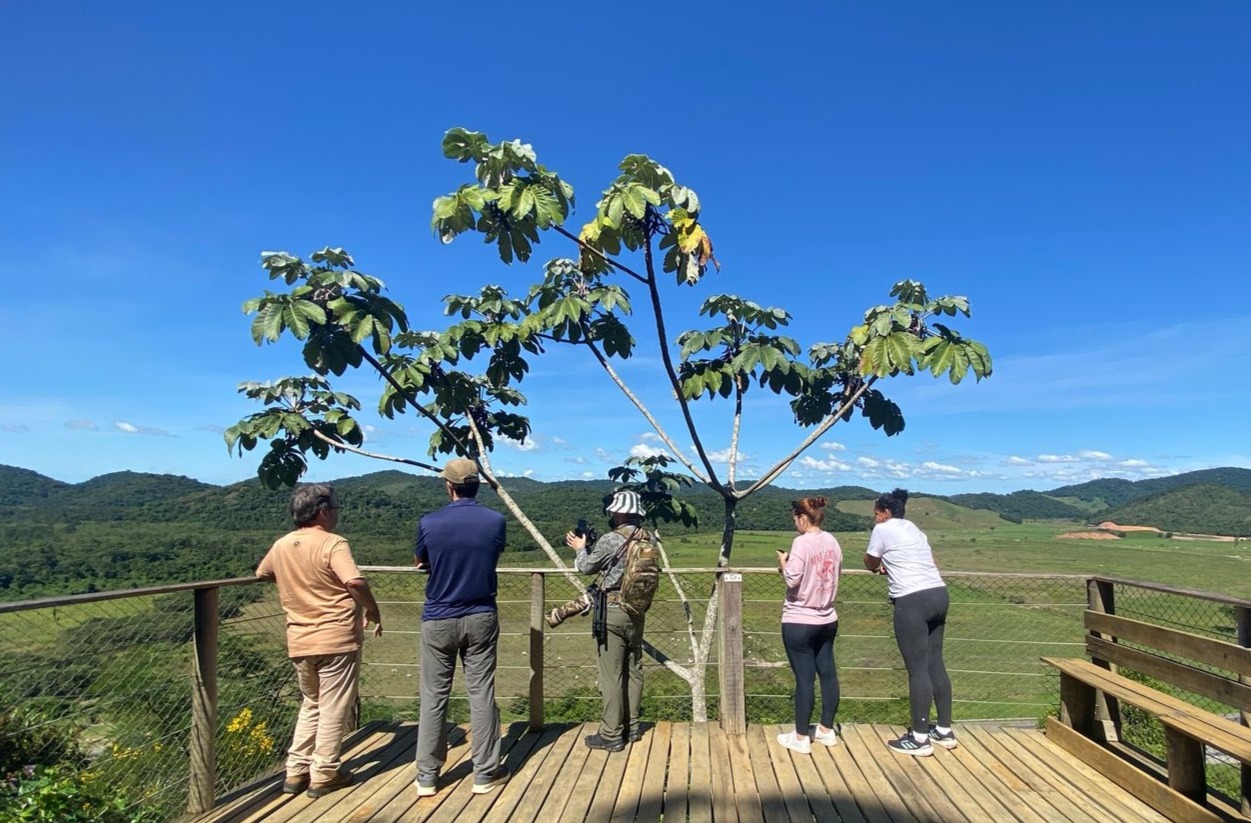
On the far side of the wildlife bridge – in the forest that the bridge was built to reconnect – AMLD has created the Golden Lion Tamarin Ecological Park. It is part protected area, part educational hub, and the entry point for visitors who want a chance to spot the monkeys and learn about what their conservation looks like in practice.
From a viewing platform, you can see the bridge and the corridors of replanted forest stretching out around it, a living map of everything the team has spent decades building. School groups come to walk in the forest, learn about the ecosystem, and meet the animals in their natural habitat (small groups only, to minimize disturbance). Individual visitors from Brazil and abroad come for guided experiences with Luis and the field team. Central to that experience is Andrea, AMLD’s field team leader, who has been working with the tamarins since the early 1980s. Mikael has visited the park with Luis and Andrea several times – he says it never gets old.
The forest is dense and humid, alive with sound. The tamarins, when they appear, are close enough to watch, wild enough to stop you in your tracks. Andrea moves through the forest with an ease that comes from decades of daily contact with these animals. She knows their calls, their family histories, their individual personalities. Mikael remembers watching her talk about a group of monkeys with great excitement – narrating their dynamics, their relationships, their movements – as if she were part of the family.
Ecotourism, Luis believes, is not peripheral to the conservation mission – it is part of it. When people stand in the forest and watch a family of tamarins move through the canopy above them, something shifts. “You are fully emotionally involved with that situation,” he says. “It’s much more impactful than watching a movie or listening to a story about animals.”
For children from the region – many of whom have never walked in the forest despite living near it – the park invites a sense of pride in something that exists nowhere else. “There is no golden lion tamarin anywhere else in the world,” he says. “It’s yours.”
Luis recalls a visitor from the Netherlands who came to plant a tree in the restored forest. Watching her standing there, hands in the soil, he noticed she was close to tears. We protect what we love, and we love what we know. That, perhaps, is the final piece of the conservation puzzle: not just protecting the animals, but making people feel that they are worth protecting – and that is what Luis and his team have built: a place where that connection can happen.
“I’d like to invite everyone to come here,” Luis says. “It’s such a fantastic experience – for everyone.” It is hard, after hearing his story, to think of a reason not to.
Get in touch with Journey Brazil’s expert team to start planning a trip around the Atlantic Forest and the Golden Lion Tamarin Ecological Park.